Shuttle and Feeder Network Solutions in Kuwait
Bridge the Gap Between Transit and Work.
Data-driven first and last-mile shuttle networks for Kuwait's business districts and residential corridors.




Feeder network management is so complex
Public transit gap
Kuwait has no metro, so employees depend on employer shuttles or long private commutes to reach their workplace.
Low route utilization
Shuttle networks built without demand data run underloaded in Kuwait, as pickup points miss where employees live.
Traffic and parking pressure
Without feeder routes, staff drive into Kuwait City's business and port districts, adding traffic and parking cost.
No service reliability data
Operations teams cannot see on-time performance, occupancy or whether each feeder route earns its running cost.
That's where we come in. Purpose-built for Kuwait's feeder network needs.





A mobility partner you can rely on.
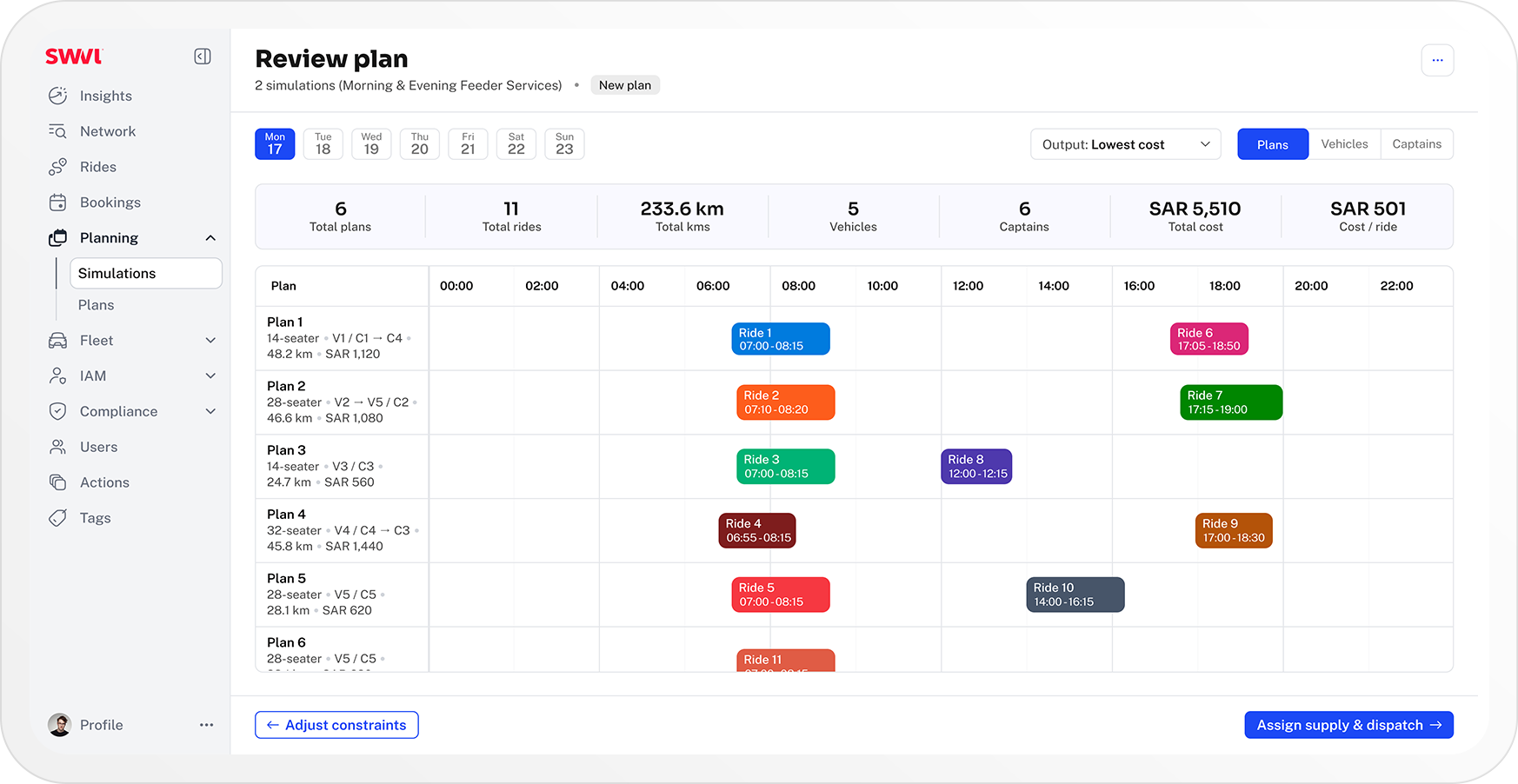
Route intelligence
Swvl studies where your employees live in Kuwait and builds an efficient network that adapts as headcounts shift.
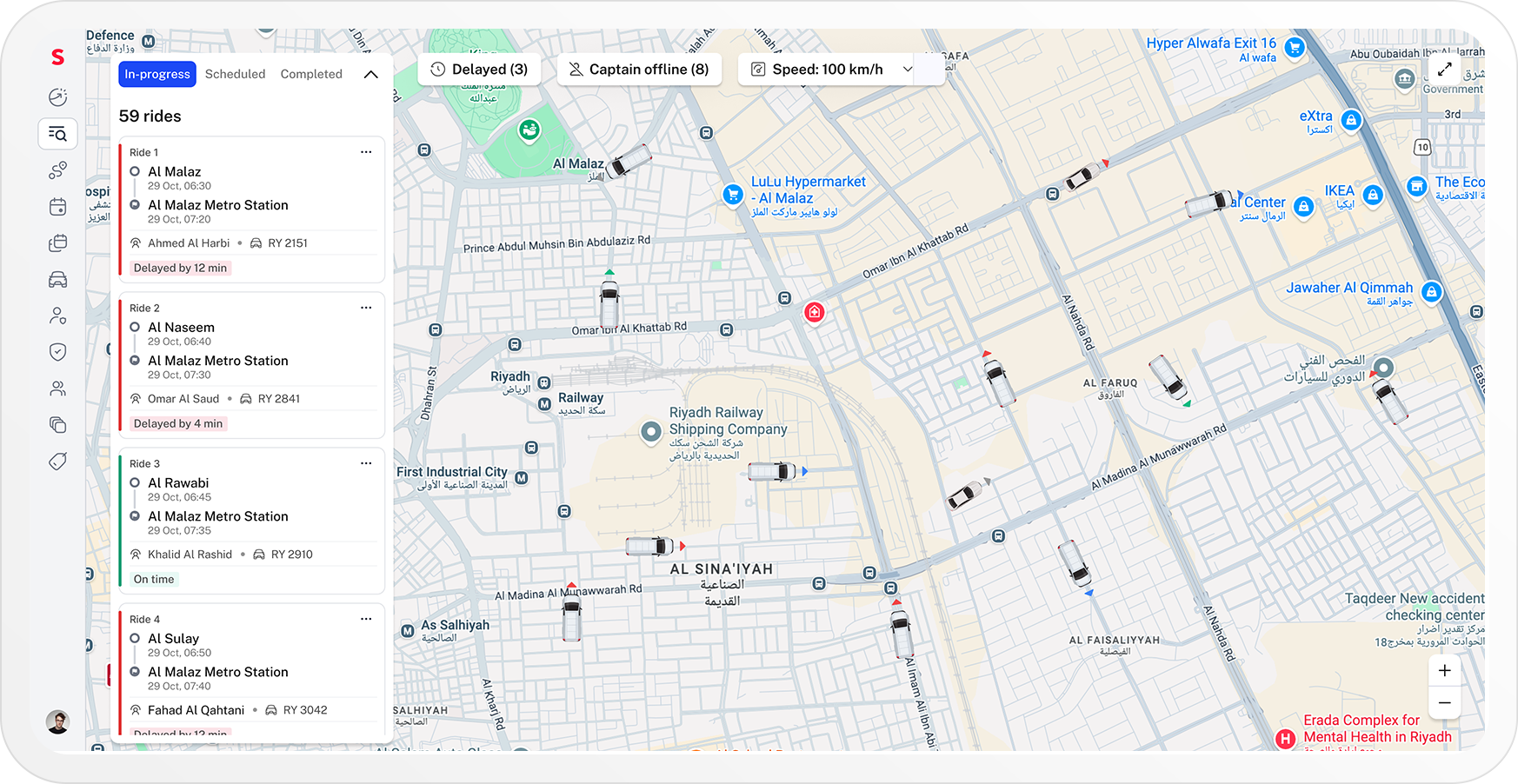
Real-time tracking
Riders track their shuttle in real time on the Swvl app and reach their pickup point in Kuwait as it arrives there.
Occupancy optimization
Every route is monitored for seat utilization, giving operations teams the data to resize or merge feeder routes.
Admin dashboard
Cost, occupancy and boarding data for every trip sit in one platform where HR and operations manage the network.
Contact sales


The Impact on Your Operations.


Optimized employee transportation through intelligent dispatch and dynamic ride allocation. Average seat utilization rose to 55% and driver punctuality reached 97.97% OTA, improving employee satisfaction while cutting fleet inefficiencies and operating costs.

55%
Seat Utilization Increase

“Swvl’s transformed our commute planning. Reservation Controls and Dynamic Allocation gave us the visibility and flexibility we needed.”
Ahmed Sabbah
CEO - Telda
CEO - Telda
25%
Seat Utilization Increase

Enhanced workforce transportation operations through dynamic routing and real-time dispatch, reducing missed clock-ins by 16%, improving staff coverage at shift start times, and minimizing service escalations and SLA violations.
16%
Decrease in monthly spend.